
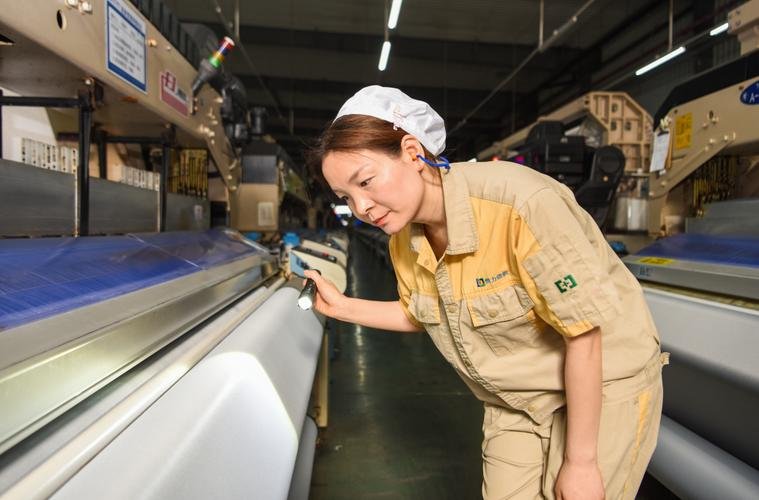
Before a loom can make a consistent fabric, the warp yarn has to be prepared. Warp yarns run lengthwise through the fabric, and a large number of ends must reach the loom in the correct order, length and tension. A problem introduced during preparation can show up later as frequent yarn breaks, loom stops, uneven construction or visible fabric defects.
The exact route depends on the yarn, fabric construction and machinery, but winding, warping and sizing are three important stages in many woven-fabric operations.
Winding: preparing suitable yarn packages
Winding transfers yarn from one package form to another that is suitable for the next process. The package needs to unwind smoothly and consistently. Poor package build, damaged yarn, knots or contamination can interrupt the following operation and create avoidable stops.
Checks at this stage commonly include package shape, yarn continuity, winding tension and the removal or joining of yarn faults according to the mill’s procedure. The aim is not simply to make a full package; it is to deliver yarn that can run reliably in the next stage.
Warping: arranging the ends in the required order
Warping brings many yarn ends together to form a warp sheet or beam. The required number of ends, length and arrangement depend on the fabric design. Tension should be consistent across the sheet, and the ends must remain in the correct order.
Crossed ends, missing ends, incorrect length or uneven tension can create trouble during sizing and weaving. A beam that looks complete is not necessarily correct, so the production team should verify the end count, beam details and relevant process records before it moves forward.

Sizing: protecting warp yarns during weaving
Sizing applies a controlled coating to suitable warp yarns to help them withstand the abrasion and repeated stresses of weaving. The recipe and application conditions need to suit the fibre, yarn count, fabric construction and loom requirements.
Too little or poorly applied size may leave yarns vulnerable to breaks. Excessive or unsuitable sizing can create other problems, including difficult size removal or changes in fabric handle. The right target is a stable process that supports weaving and can be removed or managed appropriately in the later wet-processing route.
Problems to watch for during warp preparation
- Uneven tension across the warp sheet or beam.
- Broken, missing, crossed or incorrectly arranged ends.
- Packages that unwind irregularly or contain damaged yarn.
- Incorrect sizing recipe, add-on or drying conditions.
- Handling damage or contamination before the warp reaches the loom.
How preparation quality shows up in finished fabric
Good preparation helps the loom run steadily and supports consistent fabric construction. Poor preparation may appear as repeated warp breaks, missing ends, streaks, holes or variation in the fabric. When a defect is found, the mill should compare inspection results with beam, sizing and loom records to narrow down where it began.
Buyers do not normally need to control every machine setting, but they should check the results that matter to the order: construction, appearance, width, GSM, strength where specified, roll identification and agreed inspection results.
For further reading, see our explanations of warp and weft density and broken yarns and fabric defects. Hubei Jintian operates spinning and weaving, while dyeing and finishing are handled through approved third-party partners. Contact us with your woven-fabric requirement.