When a textile supplier quotes EXW, FCA, FOB, CFR, CIF or DDP, the three-letter term changes more than the freight price. It allocates delivery responsibilities, transport costs, export and import formalities, and the point at which risk of loss or damage transfers from seller to buyer.
This guide explains the Incoterms® 2020 rules most relevant to fabric and garment-material imports. It is a commercial guide, not legal or customs advice; the final contract should use the full named place and the exact rule edition.
What Incoterms do—and what they do not do
The International Chamber of Commerce (ICC) publishes Incoterms® rules to clarify delivery, risk, transport, insurance and customs responsibilities between seller and buyer. Incoterms do not replace the sale contract. They do not, by themselves, set the fabric specification, quality acceptance limit, payment method, transfer of ownership, dispute procedure or remedies for defective goods. Those matters must be covered separately.
The 11 Incoterms 2020 rules at a glance
Seven rules can be used with any mode or combination of transport. Four are reserved for sea and inland-waterway transport.
| Rule | Transport | Delivery and risk point | Main freight responsibility |
|---|---|---|---|
| EXW | Any mode | Goods placed at buyer’s disposal at the named place, usually seller’s premises. | Buyer arranges loading, export and import formalities, and main transport. |
| FCA | Any mode | Goods delivered to the buyer’s nominated carrier at the agreed place. | Buyer arranges main transport; seller clears export. |
| CPT | Any mode | Risk transfers when goods are handed to the first carrier. | Seller pays carriage to the named destination. |
| CIP | Any mode | Risk transfers when goods are handed to the first carrier. | Seller pays carriage and required insurance to destination. |
| DAP | Any mode | Goods arrive at the named destination ready for unloading. | Seller pays carriage to destination; buyer handles import clearance and unloading. |
| DPU | Any mode | Goods are delivered after unloading at the named destination. | Seller arranges carriage and unloading; buyer handles import clearance. |
| DDP | Any mode | Goods arrive at the named destination cleared for import and ready for unloading. | Seller carries the main transport and import-clearance/duty responsibility. |
| FAS | Sea/inland waterway | Goods placed alongside the vessel at the named port of shipment. | Buyer arranges loading and main sea carriage. |
| FOB | Sea/inland waterway | Goods loaded on board the vessel at the named port of shipment. | Buyer arranges main sea carriage. |
| CFR | Sea/inland waterway | Risk transfers when goods are on board at the shipment port. | Seller pays sea freight to the named destination port. |
| CIF | Sea/inland waterway | Risk transfers when goods are on board at the shipment port. | Seller pays sea freight and minimum required cargo insurance to destination port. |
EXW export caution: EXW places export-clearance responsibility on the buyer. In a cross-border transaction, that can be impractical if the foreign buyer cannot complete export formalities in the seller’s country. Discuss FCA with the supplier when the seller should handle export clearance.
The most important distinction: who pays is not always who carries the risk
Under the C rules—CPT, CIP, CFR and CIF—the seller pays for carriage to the named destination, but delivery and risk transfer happen earlier. For example, under CIF the seller pays freight and arranges the required insurance to the named destination port, but risk transfers to the buyer when the goods are loaded on board the vessel at the shipment port.
This is why a buyer should never assume that “freight prepaid” or “CIF” means the seller carries the transport risk until the container arrives. Read the delivery point and the insurance certificate separately.
FCA or FOB for containerized fabric?
For containerized shipments, FCA is often the more appropriate rule when the seller hands the packed container to the carrier or terminal before it is loaded on board the vessel. FOB delivery occurs when the goods are actually on board the vessel. ICC guidance explains that a container may remain at a terminal for some time before loading, so FOB may not match the point at which the seller physically hands over control.
FOB remains limited to sea or inland-waterway transport. If a letter of credit requires an on-board bill of lading, discuss the documentary requirement with the bank and supplier before choosing the rule. Under Incoterms 2020, the parties can agree that the buyer instructs the carrier to issue an on-board bill of lading after FCA delivery, subject to the agreed arrangements.
FOB, CFR and CIF: three common sea-freight quotations
- FOB [named port of shipment]: seller delivers the goods on board and completes export formalities; buyer arranges and pays the main sea freight and import formalities.
- CFR [named port of destination]: seller arranges and pays sea freight to the destination port, but risk transfers on board at the shipment port. The seller is not required by CFR to buy cargo insurance for the buyer.
- CIF [named port of destination]: similar to CFR for delivery, risk and freight, but the seller must also arrange the minimum insurance required by the rule. Under Incoterms 2020, the default CIF cover is the minimum level under Institute Cargo Clauses (C), unless the parties agree otherwise.
Under CIP, the seller’s default insurance obligation is broader: Institute Cargo Clauses (A) or equivalent cover for at least 110% of the contract price. The seller still transfers risk when the goods are handed to the carrier, not when they reach the named destination.
DAP, DPU and DDP for door delivery
DAP means the seller arranges carriage to the named destination and places the goods at the buyer’s disposal ready for unloading. The buyer handles import clearance and normally unloads. Under DPU, the seller also arranges unloading at the named destination. Under DDP, the seller takes responsibility for import clearance and applicable import duties and taxes as well as delivery; the buyer normally unloads.
DDP can be difficult where a foreign seller cannot legally or practically act as importer in the destination country. Do not accept a door-delivery quote as DDP unless the seller has confirmed that it can complete the destination-country import formalities.
Example wording for a textile purchase order
A term should include the rule, the exact named place or port, and the edition. For example:
- Containerized fabric: “Woven fabric, FCA [full supplier factory or agreed terminal address], [city], China, Incoterms® 2020.”
- Port-to-port sea shipment: “Woven fabric, CIF Chattogram Port, Bangladesh, Incoterms® 2020.”
- Buyer-arranged sea freight: “Woven fabric, FOB [named port of shipment], China, Incoterms® 2020.”
These are wording examples, not a recommendation to use one term for every transaction. The named place must identify the real handover point. “FOB China” or “CIF Bangladesh” is too vague for a well-drafted purchase order.
Textile buyer checklist before confirming the quotation
- Confirm the full Incoterm, named place/port and Incoterms 2020 edition.
- Identify the exact delivery point and the moment risk transfers.
- Confirm who books the carrier, pays origin handling, main freight and destination charges, and arranges unloading.
- For CIF or CIP, request the insurance certificate and check insured party, coverage, exclusions, amount and destination.
- Confirm who handles export clearance, import clearance, duties and taxes.
- Check bill-of-lading wording and any letter-of-credit documentary requirements before shipment.
- Agree packaging, roll/carton marks, packing list, gross/net weight, CBM, inspection documents and shipment notice separately.
For shipment calculations, see how to calculate CBM, carton size, net weight and gross weight. For the product specification itself, use the fabric RFQ checklist so the delivery term does not replace the technical requirements.
Bangladesh import reminder
Before agreeing to a seller-arranged insurance term, confirm current Bangladesh insurance, bank and letter-of-credit requirements with your authorized dealer bank and insurer. An Incoterm allocates contractual responsibilities between seller and buyer; it does not override destination-country regulations or the bank’s documentary conditions.
Official references and image credit
- ICC — Incoterms® 2020 practical wallchart and the 11 rules.
- ICC Academy — FCA and FOB explained, including container shipments.
- ICC Academy — CFR and CIF explained.
- ICC Academy — CPT and CIP explained, including insurance.
- ICC Academy — DAP and DDP explained.
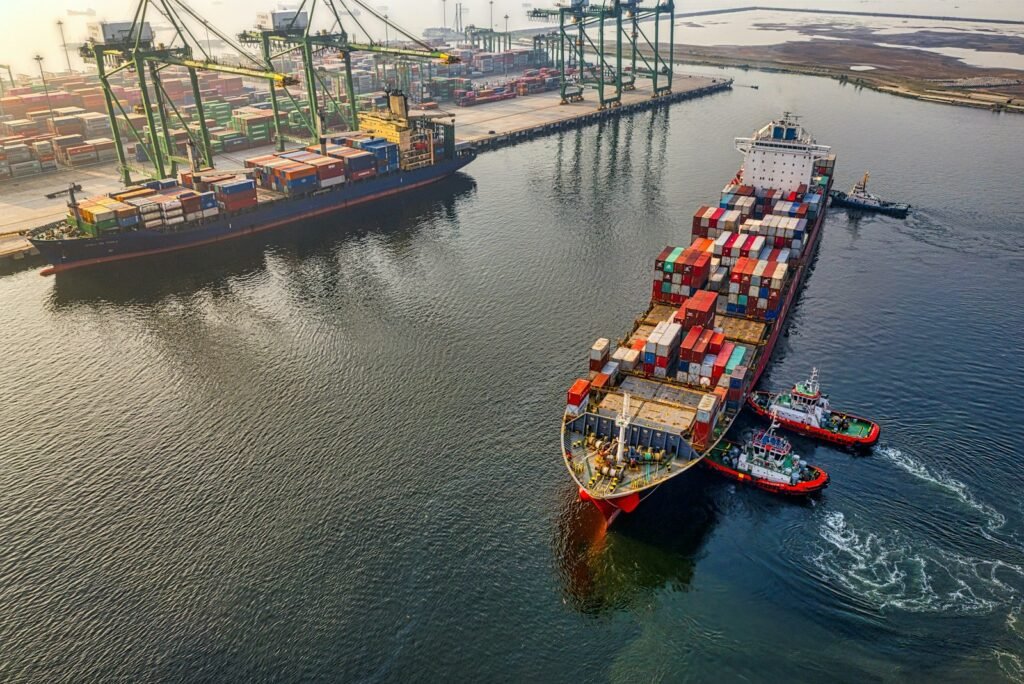
Featured image: Photo by William William on Unsplash, used under the Unsplash License. The image is illustrative and does not depict a specific shipment.