
Importing fabric, yarn, trims or textile machinery into Bangladesh involves more than arranging a supplier invoice and booking a container. The importer, bank, shipping agent, customs broker and relevant authorities may each need different records at different stages. Missing or inconsistent information can delay customs processing, create document amendments or complicate cargo release.
For a Bangladesh textile shipment, the paperwork usually moves between the importer, supplier, bank, carrier and C&F agent. The documents do not all serve the same purpose, so it helps to know which record proves the transaction, which describes the cargo and which is used for customs clearance. It is a practical checklist, not a definitive legal list for every product. Requirements depend on the HS code, import route, payment arrangement, current policy and any product-specific approval.
Start with the exact HS code and product requirements
Before asking the supplier to prepare final documents, identify the correct HS classification for the actual goods. Do not select a code only because a similar fabric, yarn or machine used it in an earlier shipment. Composition, construction, processing, use and the relevant tariff notes can affect classification.
Bangladesh Customs’ Import Export Hub allows users to search by HS code or product description and review general documents, product-specific documents, compliance conditions, tariff information and duty or tax benefits. The Hub also explains how to use the HS-code search in its FAQ. Check the live entry for the exact product and confirm any uncertainty with your C&F agent or customs adviser.
1. Importer and transaction documents
These documents establish who is importing the goods and the basis on which the transaction is being made.
- Import Registration Certificate (IRC): the importer’s registration record where required for the transaction and importer category.
- VAT/BIN certificate: the importer’s Business Identification Number and relevant VAT registration information.
- Letter of Credit (L/C): the bank’s documentary payment instrument where the purchase is made under an L/C.
- Sales or purchase order: the Bangladesh Customs Import Export Hub lists a sales/purchase order for transactions not using an L/C.
- Import Permit (IP), Clearance Permit (CP) or other payment-related documents: these may apply to a transaction without an L/C or where the applicable policy requires them.
- Regulatory approvals: permits, certificates or no-objection documents from the relevant authority when required for the specific HS code or goods.
The exact set depends on the transaction. Do not assume that every importer uses the same payment document or that a purchase order automatically replaces every bank or regulatory requirement.
2. Main shipment and customs documents
| Document | What it is used for | Textile buyer check |
|---|---|---|
| Commercial invoice | Records the seller, buyer, goods description, quantity, price, currency and invoice total. | Check the fabric or yarn description, unit of measure, quantity, unit price, total value and seller/buyer details against the purchase and bank documents. |
| Packing list | Describes how the goods are packed, including package count and packing details. | Check roll, bale, carton or pallet counts, marks, dimensions and net/gross weights against the actual packing. |
| Bill of Lading (B/L) | Sea-transport document issued by the carrier or its agent. It records shipment and carriage information and may also function as a document of title, depending on its form. | Check shipper, consignee, notify party, vessel, ports, goods description, package count, marks, weight and freight notation. |
| Air Waybill, truck receipt or railway receipt | Transport document for the relevant non-sea route. | Use the document that matches the actual mode of transport and check the shipment particulars. |
| Certificate of Origin | Records the declared country of origin and may be relevant to customs treatment or buyer requirements. | Check the origin statement and issuing body. Confirm whether it is required for the exact goods and whether a preferential-origin rule is being claimed. |
| Insurance policy or cover note | Records cargo insurance arranged for the shipment where required by the transaction or applicable rules. | Check the insured party, shipment details, route, value, coverage and exclusions with the insurer and bank. |
| Bill of Entry / import declaration | The customs declaration used to declare the imported goods for assessment and clearance. | Coordinate the declaration data with the C&F agent and make sure the underlying documents support the declared description, value, quantity and classification. |
Bangladesh Customs’ general customs-clearance guidance lists the L/C, invoice, transport document, packing list, certificate of origin (with stated exceptions), insurance policy or cover note, and VAT/BIN certificate among the documents for import release. The Import Export Hub separately lists IRC and transaction documents, including the purchase order route where no L/C is used. Always verify the requirements for the actual HS code and shipment rather than treating a general checklist as exhaustive.
3. Understand the customs declaration process
Bangladesh Customs explains that the shipping agent submits the Import General Manifest (IGM) to Customs. The importer or nominated C&F agent then prepares and submits the goods declaration, commonly called the Bill of Entry, through ASYCUDA World in the prescribed Single Administrative Document (SAD) format.
This means the importer should coordinate document preparation before the vessel arrives. The C&F agent may need bank-endorsed or original documents, authorisation, declarations or additional certificates depending on the goods and the applicable procedure. Confirm the exact submission set with the agent and the relevant bank before dispatch.
4. Reconcile every document before shipment
The supplier’s proforma invoice, purchase order or L/C, commercial invoice, packing list and transport document serve different purposes, but the underlying shipment information should be consistent. Before approving the final documents, compare:
- Parties: seller/exporter, buyer/importer, shipper, consignee and notify party, using the correct legal names and addresses.
- Goods description: fibre or material, fabric/yarn type, construction or model where relevant, and the agreed commercial description.
- Quantity and units: metres, yards, kilograms, pieces, rolls, cartons or bales. Do not mix units without a clear conversion and supporting record.
- Packages and marks: package count, shipping marks, roll or carton identification and container details.
- Weight: net weight and gross weight, ensuring that the packing list and transport document do not contradict the actual cargo records.
- Value: currency, unit price, invoice total, freight or insurance treatment where shown, and consistency with the agreed transaction documents.
- Transport: port of loading, port of discharge, vessel/voyage or other transport reference, and freight notation.
- Origin: country of origin and the supporting origin document where required.
For textile shipments, make the commercial description specific enough to identify the actual goods. If the order is woven fabric, ensure the description, composition, construction, width, weight, colour or other agreed details are consistent where those particulars appear in the relevant documents. Do not insert a technical specification or HS code that the supplier or importer has not verified.
5. Review the draft Bill of Lading carefully
Do not wait until the original transport document is issued to check the details. Review the draft B/L against the shipping instruction, commercial invoice and packing list. Confirm the shipper, consignee, notify party, vessel and voyage, ports, package count, shipping marks, goods description, gross weight and container/seal information where applicable.
Also check whether the agreed document is an original negotiable B/L, a sea waybill or a release arrangement such as telex release. The correct form depends on the contract, bank requirements and carrier arrangement. Do not ask the carrier to change a document in a way that misstates the actual shipment.

6. Textile-specific packing and quantity checks
Fabric shipments often use rolls, bales or cartons, so the packing list deserves careful attention. Reconcile the total number of rolls or packages, metres or yards, net weight, gross weight and any roll-level packing schedule. If the shipment is sold by length but transported by weight, keep the length and weight records distinct and make sure the commercial documents use the agreed basis.
Check the outer package dimensions and total volume when arranging freight. Our guide to CBM, carton size, net weight and gross weight calculations explains the basic calculation and why actual packed dimensions matter.
Practical pre-shipment document checklist
- Confirm the HS classification and check the current Bangladesh Customs Import Export Hub entry.
- Confirm IRC, BIN, payment documents and any product-specific permit or approval with the bank and C&F agent.
- Match the commercial invoice to the approved order or L/C.
- Match the packing list to the actual roll, bale or carton count and packed weights.
- Check the certificate of origin and cargo insurance documents where applicable.
- Review the draft B/L or other transport document before final issuance.
- Confirm that the C&F agent has the documents and authorisation needed to prepare the Bill of Entry.
- Keep a final scanned set of the issued documents and the supplier’s packing records for reconciliation.
Common mistakes to prevent
- Using a previous shipment’s HS code without checking the current product classification.
- Showing different quantities, package counts or weights on the invoice, packing list and B/L.
- Using a vague goods description that does not match the actual textile material.
- Approving the B/L draft before checking the consignee, notify party, port and freight notation.
- Assuming that the general document list covers every product-specific approval.
- Waiting until arrival to discover that a bank, customs broker or regulator needs an additional record.
For the commercial allocation of freight, insurance and delivery responsibilities, read our Incoterms 2020 guide for textile imports. For the technical information to provide when requesting a fabric quotation, see our fabric RFQ checklist.
Official Bangladesh references
- Bangladesh Customs Import Export Hub — search general and product-specific documents by HS code.
- Import Export Hub FAQ — explains HS-code search and the information available.
- Import Export Hub: General Documents — IRC, BIN, L/C and alternative transaction documents where applicable.
- Bangladesh Customs: Customs Clearance — general import clearance documents and procedure information.
- Bangladesh Customs: Import Procedure — IGM and Bill of Entry process.
Customs rules, document requirements and tariff treatment can change. The Import Export Hub notes that HS-code requirements should be checked against the relevant legislation and that its lists may not be exhaustive. Confirm the current requirements with Bangladesh Customs, your authorised dealer bank and your nominated C&F agent before shipment.
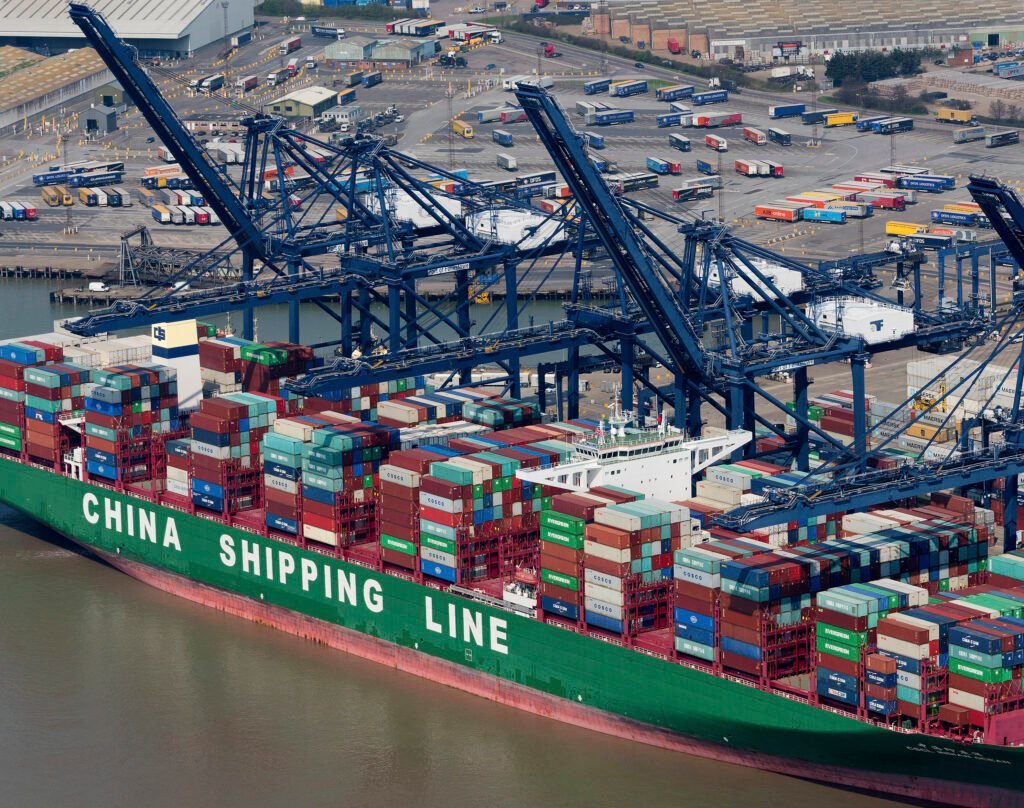
Featured image credit: Container ship photograph by John Fielding, Wikimedia Commons, licensed under CC BY 2.0. In-content image credit: Historical bill of lading by Archives New Zealand, Wikimedia Commons, licensed under CC BY 2.0. Both images are illustrative; neither depicts a current Bangladesh textile shipment.