
Fabric categories
Product availability and exact construction depend on the inquiry, color, finishing, quantity and schedule.
Knitted fabrics
Discuss knit fabric options by fiber, construction, GSM, usable width, color, finishing and intended use.
TC & CVC blends
Polyester-cotton and cotton-polyester blend fabrics for apparel and related applications.
Cotton & stretch cotton
Cotton and cotton-elastane options, reviewed against end use and performance needs.
Polyester blends
Polyester and polyester-elastane fabrics for specified garment applications.
TR, twill & Oxford
Structured woven constructions for shirts, uniforms, workwear and other apparel uses.
Satin & pocketing
Options for lining and pocket applications, subject to required weight and wash performance.
Custom specifications
Discuss requested composition, yarn count, construction, GSM, usable width and finishing.
Worldwide fabric categories
Woven fabrics
Plain weave, poplin, broadcloth, oxford, twill, denim, canvas, duck, drill, gabardine, sateen, satin, dobby, jacquard, herringbone, ripstop, seersucker, chambray, flannel, crepe and suiting fabrics.
Knitted fabrics
Single jersey, interlock, rib, pique, polo piqué, French terry, fleece, sweatshirt fleece, sweater knits, jacquard knits, tricot, warp knits, mesh and power mesh.
Nonwoven and special constructions
Spunbond, meltblown, spunlace, needle-punched, felt, lace, net, tulle, braid and bonded or laminated constructions.
Fibers and blends
Cotton, polyester, viscose/rayon, linen, wool, silk, nylon, acrylic, elastane and recycled fibers; including TC, CVC, TR, cotton-rich, polyester-rich and stretch blends.
Colors, patterns and finishes
Greige, piece-dyed, yarn-dyed, solid, printed, checks, stripes, camouflage, brushed, peached, coated, laminated, water-repellent, flame-resistant and other specified finishes.
Fabric applications
Shirting, trousers, uniforms, workwear, pocketing, lining, waistband, dresses, knit tops, sportswear, outerwear, bags, luggage, home textiles and technical textiles.
Use these categories to describe what you need. Exact fiber content, construction, GSM, usable width, finish, testing, minimum quantity and availability are confirmed for each order.
What to include in your fabric RFQ
- Composition, yarn count and construction.
- Target GSM and usable/cuttable width.
- Color or shade, finishing, end use and test standards.
- Quantity by color, sample requirements, destination and delivery date.
Where dyeing or finishing is required, it is arranged through approved third-party facilities as applicable. Specific quality standards and acceptance criteria should be agreed before bulk production.
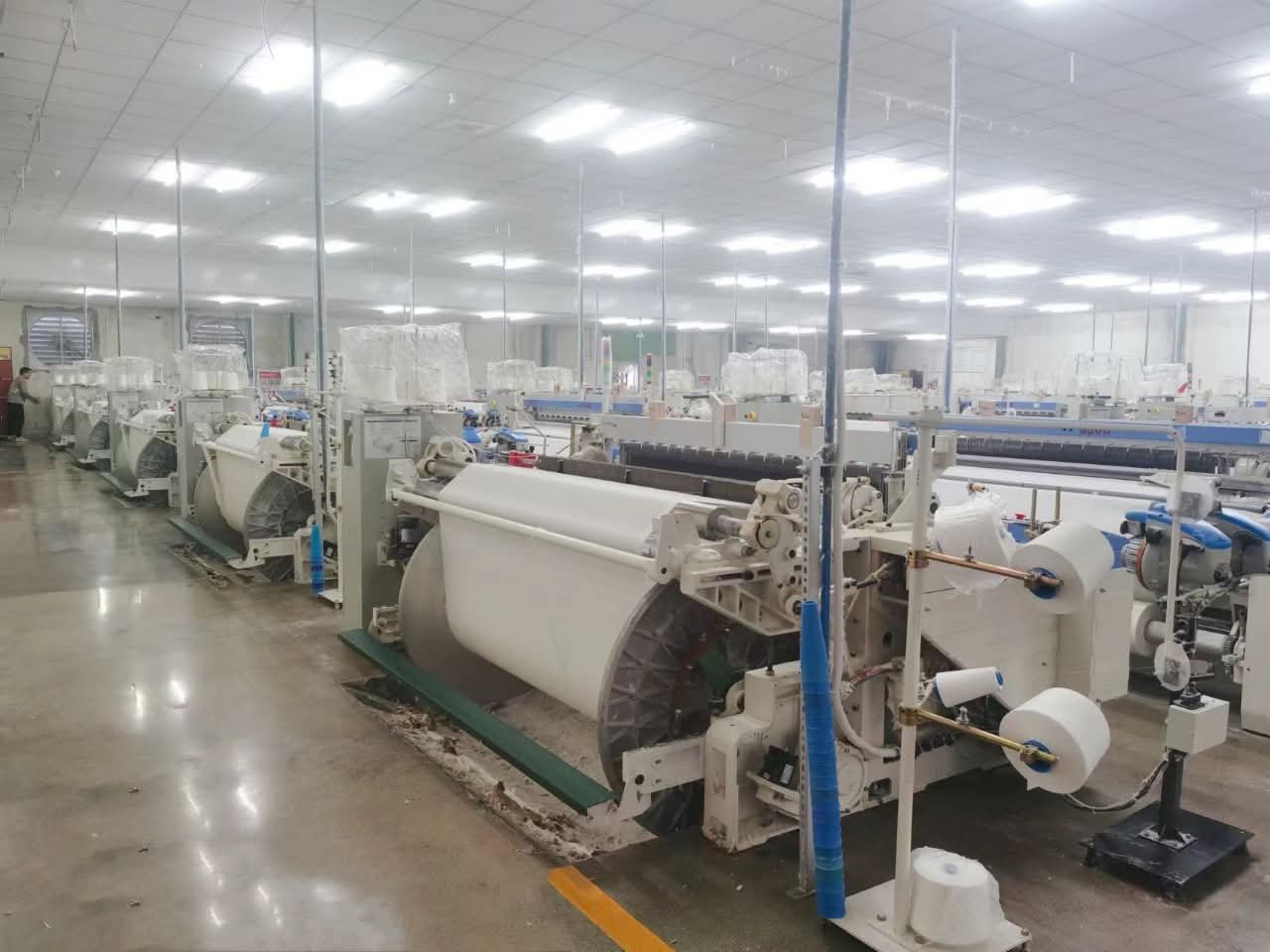
Textile production machinery.
Choosing the right fabric for your product
Start with the garment’s end use and the performance it needs. Shirting may require attention to appearance, breathability and laundering; pocketing needs suitable strength and stable dimensions; workwear may require durability and buyer-specific testing. These are selection considerations, not a guarantee that one construction will suit every application.
For a useful comparison, send the target fiber blend, yarn count, weave, GSM, finished usable width, color, finishing, test methods and order quantity. If you are comparing alternatives, ask suppliers to quote the same specification and price basis so the offers can be evaluated fairly.
Sampling and bulk order preparation
Before confirming bulk production, agree on the reference sample, color standard, tolerance limits, inspection requirements and any required laboratory tests. If a specification changes after sampling, document the revision and confirm whether it affects price, lead time or performance.
Garment categories
Explore garment product categories and share a product brief or tech pack to confirm style, fabric, quantity, quality requirements and delivery schedule.