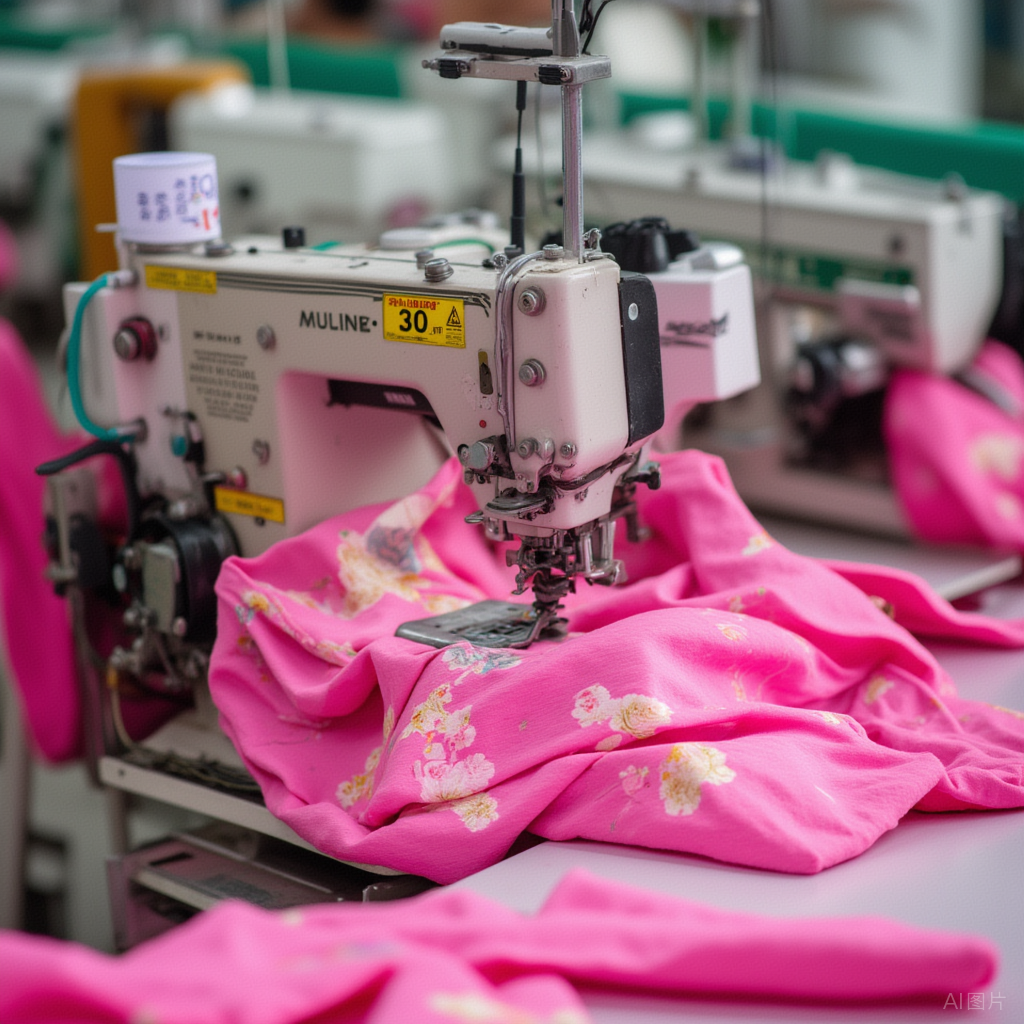
Image note: The featured visual is AI-generated. It shows a sewing machine stitching pink printed fabric; the small Chinese watermark means “AI image.” It is an illustration, not a photograph of a Hubei Jintian production line or a specific defect sample.
Print and embroidery problems are easier to prevent at sample stage than to correct after bulk garments are finished. Check artwork, placement and decoration quality on the actual fabric, then repeat the relevant checks after washing or stretching if those conditions apply to the garment.
Common printing problems
- Misalignment or inconsistent placement.
- Cracking, peeling, poor adhesion, or uneven coverage.
- Color differences between approved artwork and bulk output.
- Print damage caused by unsuitable curing or later washing.
Common embroidery problems
- Puckering caused by tension or inadequate stabilization.
- Thread breaks, skipped stitches, or inconsistent density.
- Design distortion on stretch or lightweight fabric.
- Placement differences between sizes or production batches.
How to investigate
- Compare the bulk output with the approved artwork and placement sample.
- Check fabric composition, surface, stretch, and finishing.
- Review print/embroidery settings, backing, thread, and curing instructions.
- Test durability after the intended care and wash process.
- Approve corrected samples before changing bulk production.
Prevention
Confirm artwork size, color references, placement measurements, tolerance, and wash expectations. Test on the actual garment fabric rather than a different sample material. Maintain a signed or otherwise traceable approval sample.
For garment inquiries, provide artwork, fabric details, placement, quantity, size range, and required wash tests through our contact page.
Approve the decoration on the finished material
Review print or embroidery on the same fabric, color and finish intended for bulk. Confirm the artwork file, placement, size, colors and orientation against a dated approval. Check edge definition, registration, coverage, skipped stitches, puckering, backing, loose threads and any visible adhesive or residue. Turn the garment inside out as well as inspecting the face, because backing and stitch tails can affect comfort and durability.
Discuss the intended care or wash process before choosing a test. Examine a representative decorated panel after the agreed laundering or use simulation, and compare it with an untreated control. Look for cracking, peeling, color change, distortion, thread breakage or excessive stiffness. Record the approved settings or construction at a level the production team can repeat, while leaving technical parameters to the qualified process operator.