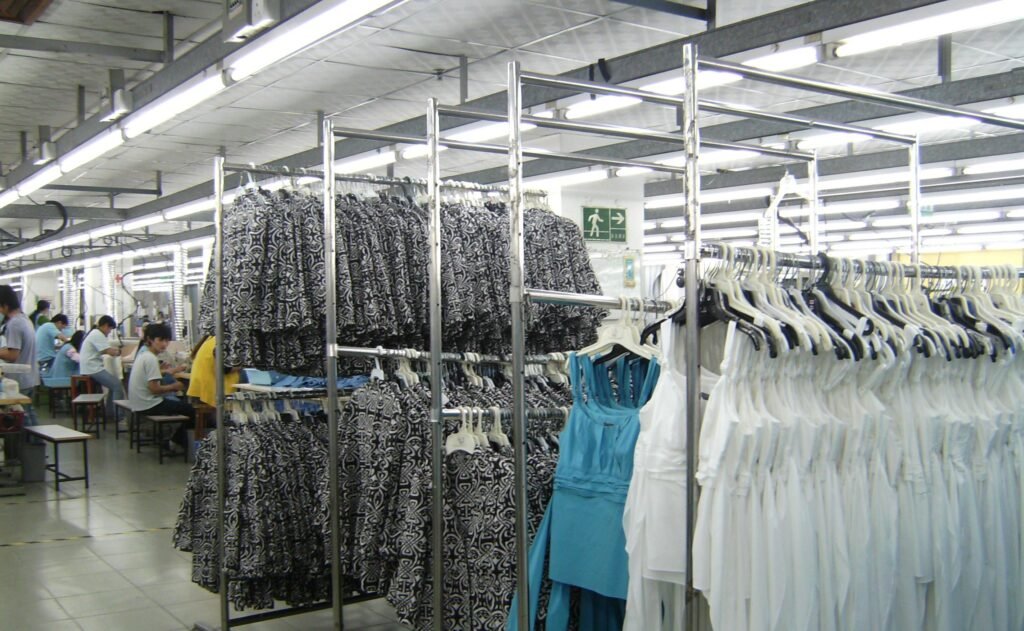

A garment can meet its measurement chart before washing and still finish outside tolerance if the fabric changes size during laundering. That is why shrinkage needs to be checked on fabric that represents the actual production lot and the intended care process. A single result from a different finish or wash condition may not predict what will happen to the finished garment.
Common causes of fabric shrinkage
- Relaxation: yarns and fabric structure relax after wet processing or tension is released.
- Fiber behavior: cotton and other fibers respond differently to moisture, heat, and mechanical action.
- Finishing conditions: drying, compacting, stentering, and other processes affect final dimensions.
- Care method: hot washing, tumble drying, and harsh treatment may cause more change than the intended care label allows.
How to check shrinkage
- Agree the washing and drying method with the buyer or testing team.
- Mark measured distances in both length and width on a representative sample.
- Measure before treatment, wash and dry according to the agreed method, then measure again.
- Calculate dimensional change and compare it with the buyer’s approved limit.
- Repeat when fabric lots, finishes, or processing conditions change.
How to reduce the risk
Discuss expected shrinkage during fabric development, use an appropriate finishing route, and validate the result on production-representative fabric. Garment patterns may need planned allowance, but pattern allowance should not replace fabric testing.
Before placing a bulk order
Confirm fiber composition, construction, GSM, usable width, finish, test method, acceptable shrinkage, and whether the result applies to the actual color and lot. Keep the approved report and sample for comparison.
Need a fabric quote? Send your specification, target quantity, color, required tests, and delivery destination through our contact page.
Record a fabric shrinkage result that can be repeated
Before testing, agree on the specimen size, marking method, conditioning, wash and drying procedure, number of specimens, calculation and acceptance limits. Measure length and width separately and keep the original dimensions with the report. Identify the fabric as greige, finished or garment-washed so results from different stages are not compared as if they were the same material.
Sample more than one production lot or color when the order requires it. If results are outside the agreed limit, repeat only under the same documented conditions using a traceable retained sample. Review whether the fabric relaxation and finishing route match the buyer’s expected garment care. This article covers general causes and prevention; for the buyer’s approval test before cutting, see the separate pre-cutting test guide.