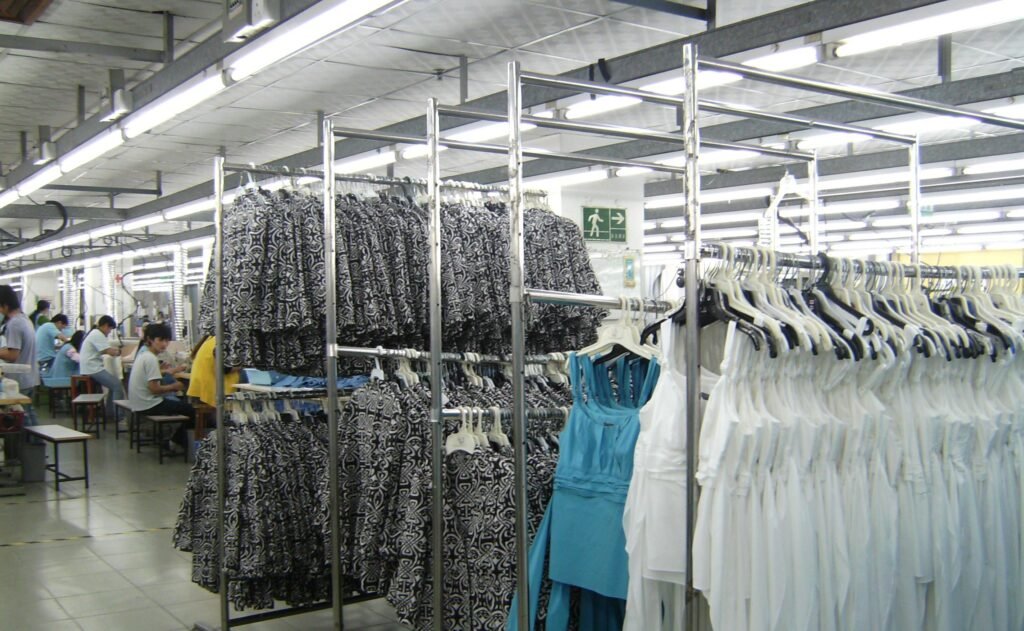
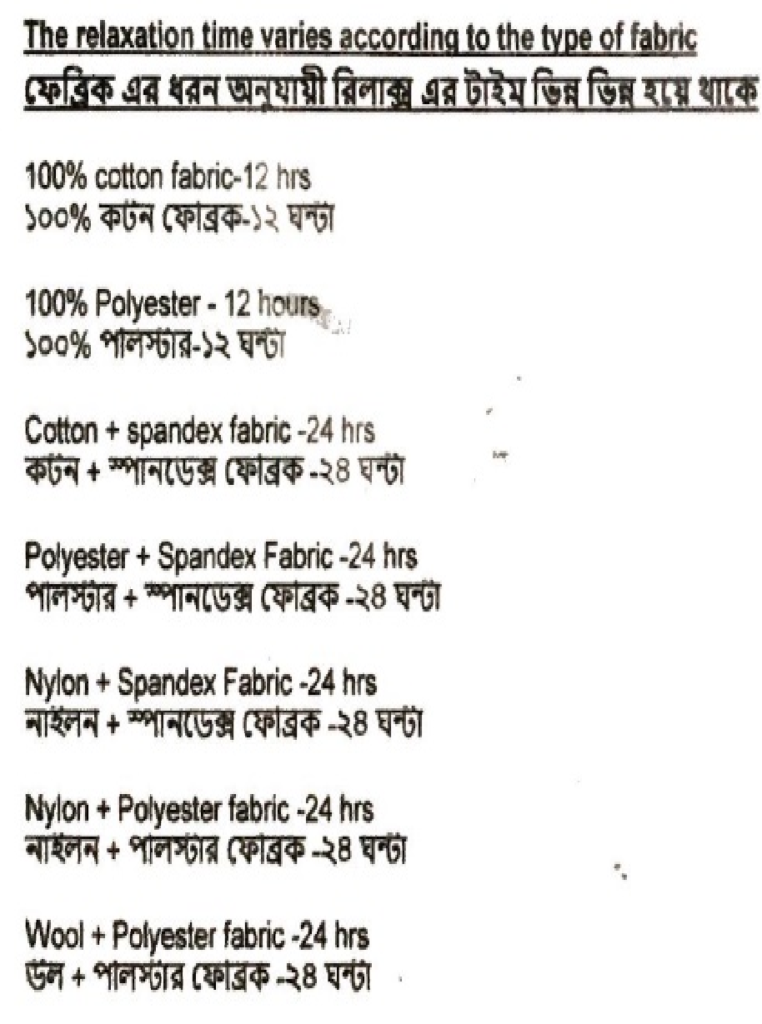
Fabric relaxation time before cutting is an important preparation control before spreading and cutting. Inadequate relaxation can cause fabric distortion, size variation, pattern mismatch and avoidable cutting waste. Relaxation time should be determined by the approved SOP, fabric construction, fibre content, stretch characteristics and trial results.
Fabric Types Observed
During the review, the following fabrics were observed after 24 hours of relaxation:
- Recorded as: 77% viscose, 9% polyester and 4% elastane. These figures total 90%, so the missing 10% must be confirmed from the original supplier specification before the blend is used for production or buyer approval.
- 95% cotton and 5% spandex
These examples highlight why fabric-specific behaviour should be considered. Some stretch or sensitive fabrics may require additional relaxation time, but any change must be supported by trials and formally approved rather than applied informally.

Problems Identified
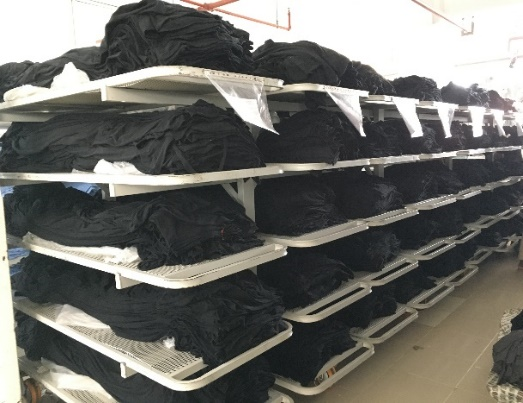
- The relaxation area does not have enough dedicated space.
- Some fabric is kept in temporary locations without appropriate care.
- Space constraints have not been escalated effectively to management.
- Some fabric has remained on relaxation racks for 48 hours, exceeding the current 24-hour maximum and blocking space needed for other rolls.


Recommended improvements to the fabric relaxation SOP
- Revise the SOP to define fabric-specific minimum relaxation times, maximum holding limits, release criteria and approval responsibilities.
- Provide adequate, clearly marked relaxation space and protect fabric from contamination, damage and unnecessary tension.
- Use a relaxation tag showing fabric composition, roll or lot number, start time, required duration, completion time and operator.
- Apply first-in, first-out rack management and move fabric promptly after the approved relaxation period and checks.
- Escalate space shortages instead of placing fabric in unsuitable temporary areas.
- Review relaxation records regularly and validate any proposed changes through fabric trials and quality checks.
Conclusion
Effective relaxation control supports accurate spreading and cutting. A documented, fabric-specific SOP, sufficient storage space and clear records can reduce distortion, delays and fabric waste. For woven-fabric requirements, browse our fabric categories or send your fabric specification to our team.