
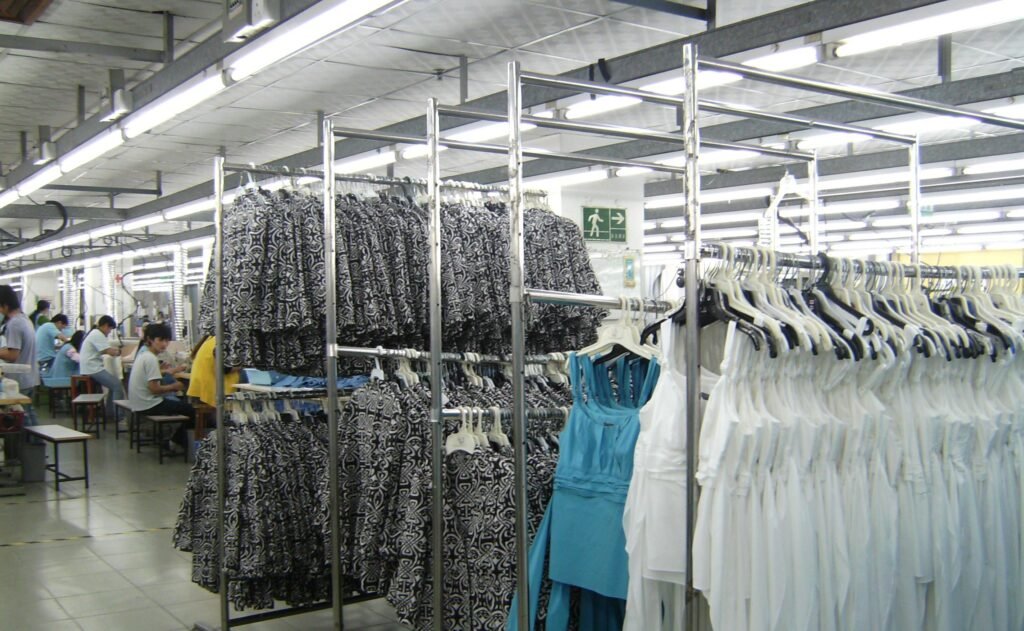
Photo note: The image shows garments on racks in a production area. It gives context for apparel appearance review; it does not show an oil mark or pressing-shine defect.
Oil marks and unwanted shine can reduce garment appearance quality. Some marks come from machine contamination or handling; others appear when heat and pressure alter the surface of the fabric.
Potential causes
- Oil or dirt on sewing equipment, tables, or handling surfaces.
- Excessive pressing temperature, pressure, or dwell time.
- Incorrect pressing cloth or unsuitable equipment settings.
- Fabric surface or finish that is sensitive to heat and pressure.
How to diagnose
- Record where and when the mark appears.
- Check whether it occurs repeatedly at the same machine or operation.
- Inspect equipment cleanliness and pressing settings.
- Test adjustments on a sample before changing bulk production.
- Verify that any cleaning or pressing change does not alter shade or hand feel.
Prevention
Maintain equipment, keep work surfaces clean, train operators on fabric-sensitive pressing, and use approved temperature and pressure settings. Avoid applying stain-removal chemicals to bulk garments without testing compatibility first.
For garment quality inquiries, share the fabric type, defect photos, process stage, and quantity through our contact page.
Separate contamination from heat or pressure marks
Document the mark location, color, shape and whether it transfers to a clean white cloth. Compare affected garments with an unmarked control from the same lot. Review the production sequence around the time the defect appeared, including machine lubrication, handling surfaces, pressing temperature settings, interlining and any protective sheet used. A glossy patch may result from pressure or heat even when no oil is present.
Before attempting spot cleaning, test the proposed method on an inconspicuous sample and confirm it will not alter shade, surface texture or finish. Keep a sample of the original defect and record each treatment tried. If defects repeat, inspect equipment and work surfaces and verify settings across operators. Approve any corrective process on a representative garment before reworking the full quantity.